Published: August 21, 2026
Last updated: August 21, 2026
Uber's Agentic Pods: A 10-Day Playbook for AI Beyond Engineering
In July 2026 Uber CTO Praveen Neppalli Naga published the operating method behind something the company calls Agentic Pods. The context first: inside engineering, agentic AI adoption was already saturated. 99% of Uber engineers use AI tools, more than 70% of pull requests come from local or cloud agents, and engineers had built over 2,500 agent skills across the software development lifecycle.
The open question was the rest of the company. Finance, legal, operations, marketing, customer support, HR, procurement. These functions run on manual, nuanced workflows spread across dozens of systems. You cannot automate them from a process diagram. So Uber stopped trying to automate them from a distance.
The Method
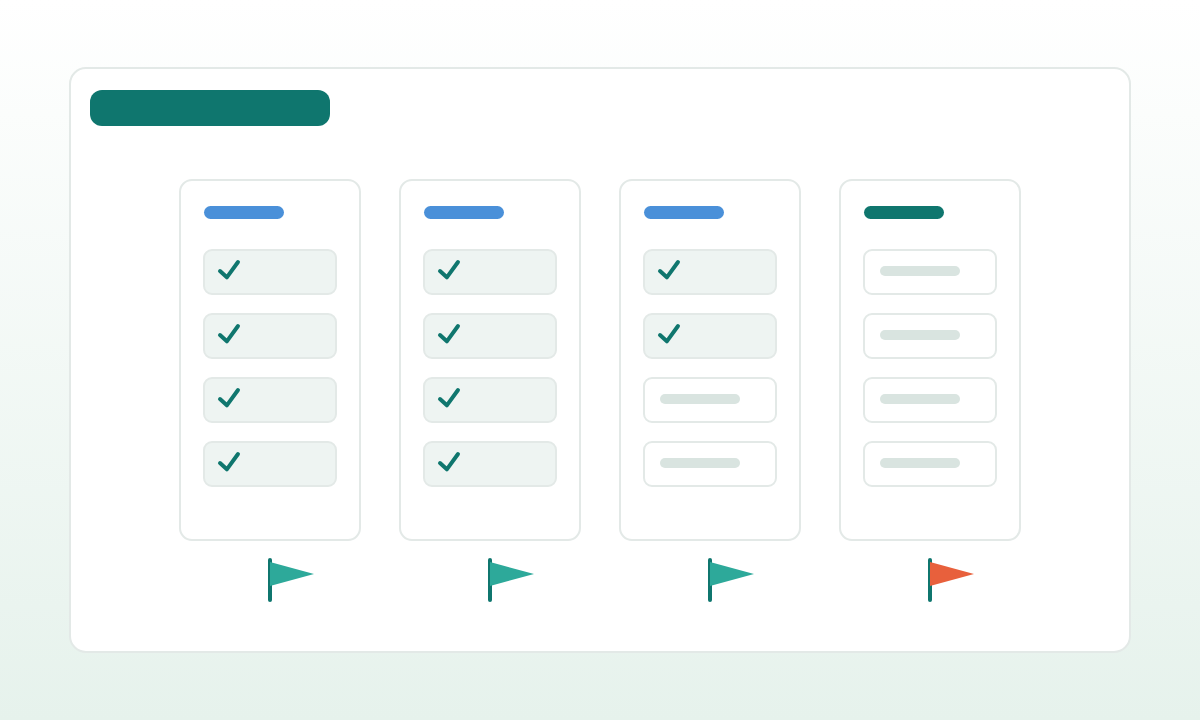
Uber handpicked roughly 30 of its most AI-proficient engineers and paired each one with a domain expert from a business function. Every pod got exactly ten days on a fixed sequence:
| Days | What happens |
|---|---|
| 1-2 | Shadow the expert. Observe every step, document the real workflow, ask questions. |
| 3 | Prioritize opportunities by scale, repetition, business impact, and data availability. |
| 4-5 | Build a working agent alongside the person who does the job. |
| 6-9 | Validate with several other people doing the same work. Does it generalize? |
| 10 | Ship to production. |
No committee, no requirements phase, no pilot that quietly becomes permanent. In two months Uber ran 16 pods across 16 different business functions.
The Numbers
The reported results are concrete:
- Capital allocation analysis across 150 cities: 15 hours down to 30 minutes
- Financial pacing reports: 2 days down to 10 minutes
- Marketing web quality assurance: 2 weeks down to under an hour
- Support workflow creation: 9,000 manually built workflows replaced with self-service automation
What surprised Naga was not the speed. It was how quickly engineers embedded in an unfamiliar domain found opportunities that had been hiding in plain sight.
The Lesson That Matters
One line carries the whole post: the workflow becomes the unit of automation, not the individual task.
The biggest wins rarely came from speeding up one step. They came from redesigning the entire workflow around AI, which in practice meant eliminating handoffs, removing approval steps that no longer earned their keep, retiring legacy tooling, and cutting vendor spend. Task-level automation leaves the surrounding process intact and produces incremental gains. Workflow-level redesign compounds.
The second lesson is about where the opportunities live. The best ones are rarely visible from outside the function. You find them by sitting next to the person doing the work, understanding every friction point, and building with them rather than for them. One of the sharpest observations about this model: what matters is not the pair itself but that someone in it carries the scar tissue of the process. Without a person who has suffered through the work manually, you automate the imaginary version.
What Does Not Transfer Automatically
Before copying this into your own company, note what makes it work at Uber:
- A bench of AI-fluent engineers who can be lent out for ten full days. Most companies do not have thirty people with this profile. Many do not have one.
- A hard timebox that forces shipping. Day 10 production usually means human-in-the-loop at first, not full autonomy.
- Validation beyond one person. Days 6-9 exist because an agent tuned to one expert's habits often fails for everyone else.
- Governance. Pods shipping bespoke tools without a shared platform layer create shadow AI: fragmented models, inconsistent controls, compliance exposure. Speed needs a lightweight framework for evaluation, security review, and monitoring.
What A Small Company Can Take From It
You probably cannot lend out thirty engineers. You can keep the four ingredients: observe before you build, pick one narrow high-frequency process, timebox the build, validate with more than one person before calling it done.
If you run the business yourself, the pod collapses to one: watch your own week, find the process you dread, rebuild it around automation instead of patching it. We described the same pattern from the other side in AI agents vs AI workflows and when to move from n8n to custom software.
If nobody in the company has the engineer half of the pair, that is exactly the gap an outside partner fills: the same sequence of shadowing, prioritizing, building, and validating, run against your actual stack. If you want to find out which of your workflows deserves the ten days, book a scoping call.
---
Sources: Praveen Neppalli Naga on LinkedIn · Business Insider: Uber turns its best AI engineers loose on the rest of the business · Business Insider: Uber's CTO bets on Agentic Pods