
Published: September 5, 2026
Last updated: September 5, 2026
Microduck: The $399 Robot That Learns New Tricks
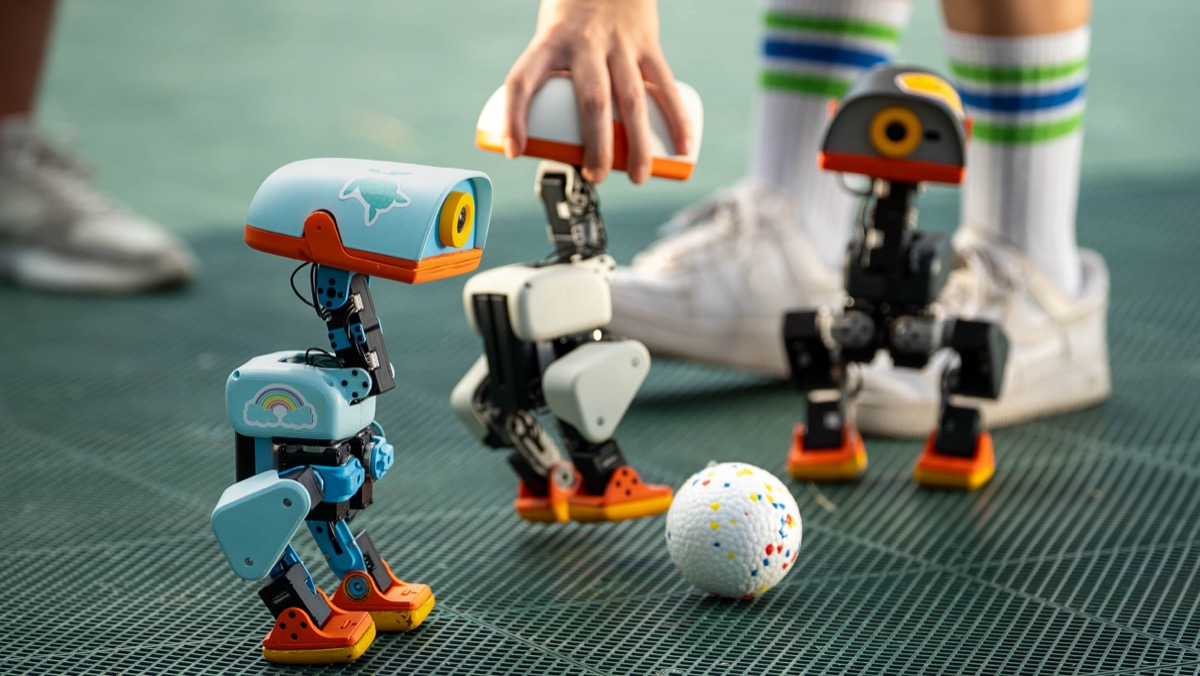
A duck on roller skates is a strong opening argument for robotics. Microduck makes a better one when you look past the orange feet: you can inspect the software, train a movement and see what happens when the floor gets a vote.
Pollen Robotics, Hugging Face's robotics team, introduced the little biped on 27 August 2026. It stands 25 cm tall, weighs under 800 g and has 15 motors, plus a camera, range sensing and two motion sensors. Its beak can grasp objects. Meet Microduck.
Checked on 5 September 2026. This is a researched introduction, not a hands-on review. Cover and media: Pollen Robotics / Hugging Face, from the official press kit.
First, the duck on wheels
Watch the feet change direction while the upper body stays upright. The wheels make the clip funny; coordinating that body makes it interesting. This is creator footage, with the original sequence and timing preserved. Open the MP4 or browse the official media gallery.
On X, Clément Delangue posted both the launch announcement and a longer raw-footage post. Follow the latter for another look at the physical robot. The clips here come directly from Pollen's press gallery.
The trick behind the tricks
Microduck's movement comes from learned control policies: models that turn observations and commands into motor actions. The public runtime runs its policy loop onboard at 50 Hz. The project splits the software running the robot from the tools used to train its movements. Robot runtime.
The training repository uses MuJoCo physics simulation and PPO reinforcement learning, then exports policies to ONNX for deployment. Training includes variation in motor behaviour and operating conditions to help bridge simulation and reality. Local training needs a CUDA GPU. Training code and requirements.
The project also documents training on Hugging Face Jobs if you need a hosted GPU. Hosted compute has its own billing.
For a newcomer, the useful sequence is: choose one movement, train in simulation, inspect the result, then test it on hardware. A successful virtual duck is the start of that last step. It still has to meet a real battery, real joints and a real floor.
The floor gets a vote
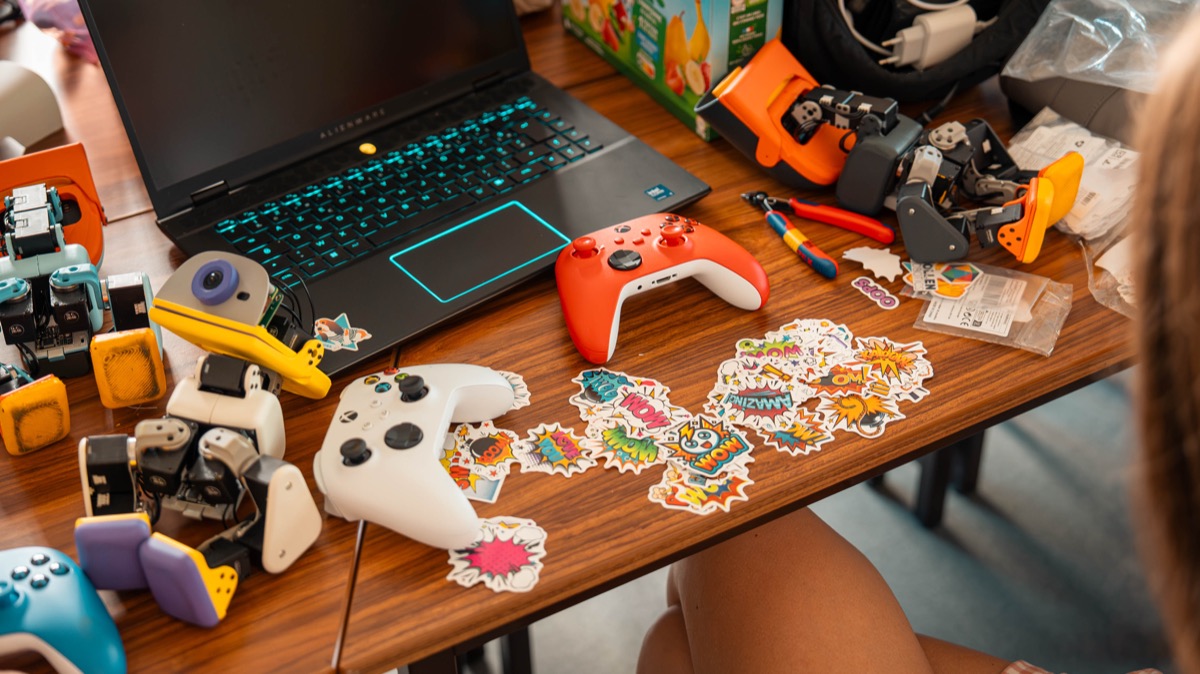
In this clip, a person disturbs the robot and it adjusts its posture. Open the MP4. Watching the recovery is more informative than watching a pose: you get to see a disturbance and a response. A short demonstration still leaves the repeatability question open.
Our first experiment would be a polite bow. Start upright, lower the head, return to the same stance. Give it a clear finish and record ten attempts, including failures. Then change one condition and repeat. Did it keep both feet planted? Did it return to its starting pose? How often did a person need to intervene?
That is our proposed exercise, not a result we measured. Its appeal is the scorecard: small enough to understand, physical enough to expose mistakes. A duck that bows beautifully once has given you a clip. Repeated attempts tell you what you have built.
What the $399 actually means
The advertised introductory preorder price is US$399 before taxes and shipping. The base package lists the robot, battery, USB-C cable and game controller. Accessories such as rollers appear in a separate pack. Pollen targets first deliveries before Christmas 2026, initially in North America and Europe. That is a delivery target, not stock ready to dispatch. Product and package details.
Two details deserve a place beside the appealing price. Pollen explicitly limits its open-source claim to the software; mechanical and electronic design files are outside that statement. Some specifications, including camera details and the age recommendation, remain provisional. Check the current press fact sheet before ordering for a particular project.
Give the virtual duck a go
Open Pollen's Microduck simulator on Hugging Face to explore the virtual robot before committing to hardware. Keep simulation and physical footage separate when judging what a new skill can do.
Our take: Microduck makes the learning loop tangible. The personality gets you to press play; the open software gives you somewhere to go afterwards. Pick a small behaviour, define what success looks like and keep the failed attempts. That is where the interesting robotics begins.
Working on an AI prototype of your own? Bring UrbanoDX one task to test. We can help define the inputs, evaluation and software integration before the demo becomes a larger commitment.