
Publicado: 25 de abril de 2026
Última actualización: 25 de abril de 2026
Lo que una aplicación web inmobiliaria enseña sobre la UX de búsqueda con IA
La búsqueda inmobiliaria es un banco de pruebas potente para el diseño de producto con IA. Los usuarios rara vez piensan solo en campos de base de datos. Mezclan restricciones duras, preferencias, compromisos y sensaciones.
Eso lo convierte también en un patrón útil para muchos flujos de trabajo B2B. Lo que importa es la similitud estructural: un dominio con entradas difusas, restricciones duras, preferencias blandas y la necesidad de comparar entre muchas opciones es un dominio donde la IA puede ganarse el sitio, siempre que el producto le dé al usuario una interfaz de revisión de verdad, no un hilo de chat.
La entrada es difusa
A un comprador pueden importarle el trayecto al trabajo, la luz natural, el ambiente del barrio, el precio, la distribución, los colegios, el riesgo de reforma y el valor de reventa futuro. Algunas de esas cosas están estructuradas. Otras no.
Una taxonomía útil al diseñar el parser:
- Restricciones duras. Precio máximo, mínimo de dormitorios, estar dentro de un distrito escolar. Incumplirlas excluye el anuncio.
- Preferencias blandas. Orientación sur, zona caminable, poco ruido de tráfico. Influyen en el ranking pero no excluyen.
- Compromisos. "Más espacio aunque suponga un trayecto más largo." El parser debería codificarlos como pesos emparejados, no como filtros separados.
- Sensaciones. "Tranquilo", "animado", "moderno". Se traducen en puntuaciones derivadas: datos de ruido, datos de afluencia peatonal, rango de antigüedad del edificio. El mapeo es explícito y editable.
- Negativos. "Que no sea planta baja", "sin vías de tren a menos de 200 m". Suelen perderse si el parser solo extrae positivos.
La IA puede ayudar a traducir esa intención difusa en una primera forma de búsqueda, pero el producto sigue necesitando exponer las suposiciones. Cada puntuación derivada y cada interpretación de una sensación debería ser visible como un chip que el usuario puede ajustar o quitar. "Moderno" no es un campo de base de datos; es un paquete de campos, y el usuario debería ver el paquete.
La salida debe ser comparable
Los usuarios no solo necesitan una respuesta. Necesitan un conjunto de resultados que puedan comparar.
Por eso la búsqueda con IA debería terminar muchas veces en una interfaz de producto:
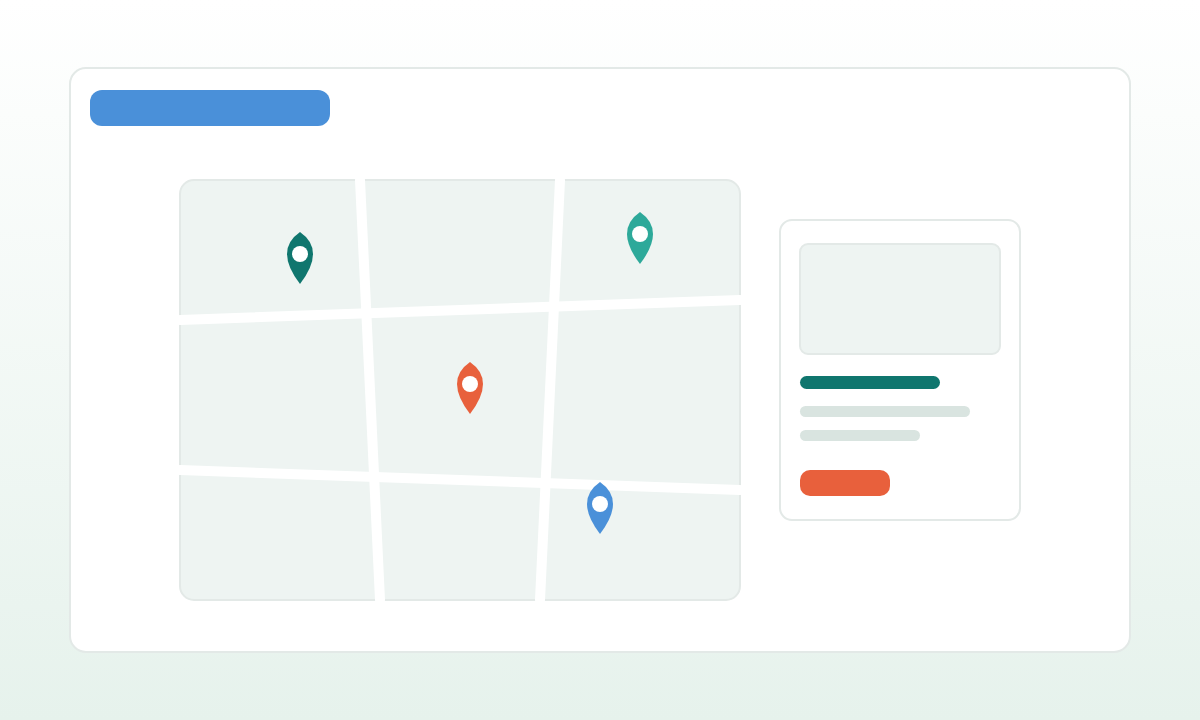
- Resultados en mapa
- Listas filtradas
- Tarjetas con compromisos visibles
- Búsquedas guardadas
- Criterios editados por personas
El paso de IA es el puente, no el destino.
El diseño de la tarjeta carga con la mayor parte de la confianza. Una tarjeta que ayuda al usuario a decidir muestra:
- El precio, las características clave y una buena foto.
- Una línea breve de "por qué encajó": qué chips cumple este anuncio y cuáles no.
- Las diferencias frente a las preferencias declaradas del usuario ("12 minutos más de trayecto, $40k por debajo del presupuesto").
- Una acción clara: guardar, ocultar, comparar, contactar.
Esa misma forma se generaliza fuera del sector inmobiliario. Una tarjeta de ticket de soporte muestra prioridad, nivel del cliente, acción sugerida y "por qué subió a lo alto de la cola". Una tarjeta de candidato muestra la puntuación de encaje, las habilidades que coinciden y las carencias. El principio es el mismo: la IA ordena; la tarjeta explica; el usuario decide.
El mismo patrón aparece en B2B
Los equipos de soporte comparan tickets. Los de finanzas comparan excepciones. Los de operaciones comparan tareas. Los de ventas comparan cuentas. Los de producto comparan peticiones de funcionalidades.
En todos esos casos, la IA es útil cuando ayuda a estructurar la primera pasada y deja a las personas una interfaz de revisión clara. En concreto:
- Soporte. "Tickets críticos de cuentas enterprise abiertos en las últimas 4 horas que mencionen facturación." El parser produce un filtro estructurado; la cola muestra tarjetas con sus motivos.
- Finanzas. "Facturas donde el total de las líneas difiere del total de la cabecera en más de un 1%." Las excepciones se convierten en una lista de triaje, no en una caza por hojas de cálculo.
- Operaciones. "Tareas abiertas bloqueadas por una dependencia externa durante más de 48 horas." Una cola diaria con responsables y constancia del último contacto.
- Ventas. "Cuentas cuyo uso cayó un 30% intermensual y cuya renovación llega en los próximos 60 días." Una lista priorizada que muestra las señales subyacentes.
- Producto. "Peticiones de funcionalidades que mencionen multidivisa, agrupadas por nivel de cliente y ARR." Temas con los tickets de origen enlazados, no un resumen de chatbot.
Por eso una aplicación de búsqueda inmobiliaria puede enseñar lecciones más amplias sobre el diseño de flujos de trabajo con IA. Los patrones visibles (parsear a estructura, chips editables, tarjetas con motivos, comparar y actuar) se transfieren sin fricción. Al equipo interno rara vez le interesa el "sector inmobiliario"; le interesa la prueba de que la IA puede integrarse dentro de una forma de producto familiar sin renunciar al control. Una demo de estilo consumidor con una estructura de estilo B2B es una de las maneras más eficientes de entregar esa prueba.